Why Your Feet Hurt After Standing All Day (And How to Fix It)

After a long day at work, do your feet feel sore, tired, or painful?
Whether you're a healthcare professional, teacher, retail worker, employee, or anyone who spends hours on their feet, foot pain can quickly become part of your daily routine.
Many people accept foot pain as "normal" because their job requires standing all day. But while it's common, it shouldn't be ignored.
Persistent foot pain is often a sign that your feet are under more stress than they were designed to handle.
The good news? Understanding what's causing the discomfort is the first step toward lasting relief.
What Happens to Your Feet When You Stand for Long Hours?
Your feet serve as the foundation of your body.
Every day, they support your entire body weight while helping you maintain balance and posture.
When you stand for extended periods, several things happen:
Muscles become fatigued
Ligaments experience continuous tension
Joints absorb repetitive stress
Blood circulation may become less efficient
Pressure builds up in specific areas of the feet
Over time, this constant loading can lead to discomfort, pain, and even chronic foot conditions.
Common Causes of Foot Pain After Standing All Day
Not all foot pain has the same cause.
Several factors may contribute to the discomfort you're experiencing.
1. Poor Arch Support
Your arches help distribute body weight and absorb shock.
When the arches lack proper support, certain areas of the foot become overloaded.
This may result in:
Arch pain
Heel pain
General foot fatigue
Increased pressure on the knees and lower back
People with flat feet or overly flexible arches are particularly susceptible.
2. Plantar Fascia Strain
The plantar fascia is a thick band of tissue that supports the arch of your foot.
Standing for prolonged periods can place excessive tension on this structure, leading to irritation and inflammation.
Common symptoms include:
Heel pain
Arch discomfort
Sharp pain when taking the first steps in the morning
Tenderness after long shifts
This condition is commonly known as plantar fasciitis.
3. Unsupportive Footwear
Many shoes prioritize style over support.
Even branded footwear may fail to provide adequate structure for people who stand for long hours. Common examples include ballet flats, pumps, high heels, slippers (including flip-flops and recovery-style slides), and narrow-fitting sneakers such as Adidas Sambas. While these shoes may be fashionable or comfortable for short periods, they often lack the support needed for prolonged standing.
Common footwear issues include:
Thin soles that provide minimal shock absorption
Lack of arch support, causing increased strain on the feet
Excessive softness that allows the foot to collapse inward
Poor cushioning distribution, leading to pressure buildup in specific areas
Worn-out midsoles that no longer provide adequate support
Narrow toe boxes that restrict natural toe movement and alter foot mechanics
Without proper support, your feet are forced to work harder throughout the day, which can contribute to fatigue, discomfort, and pain in the feet, knees, hips, and lower back.
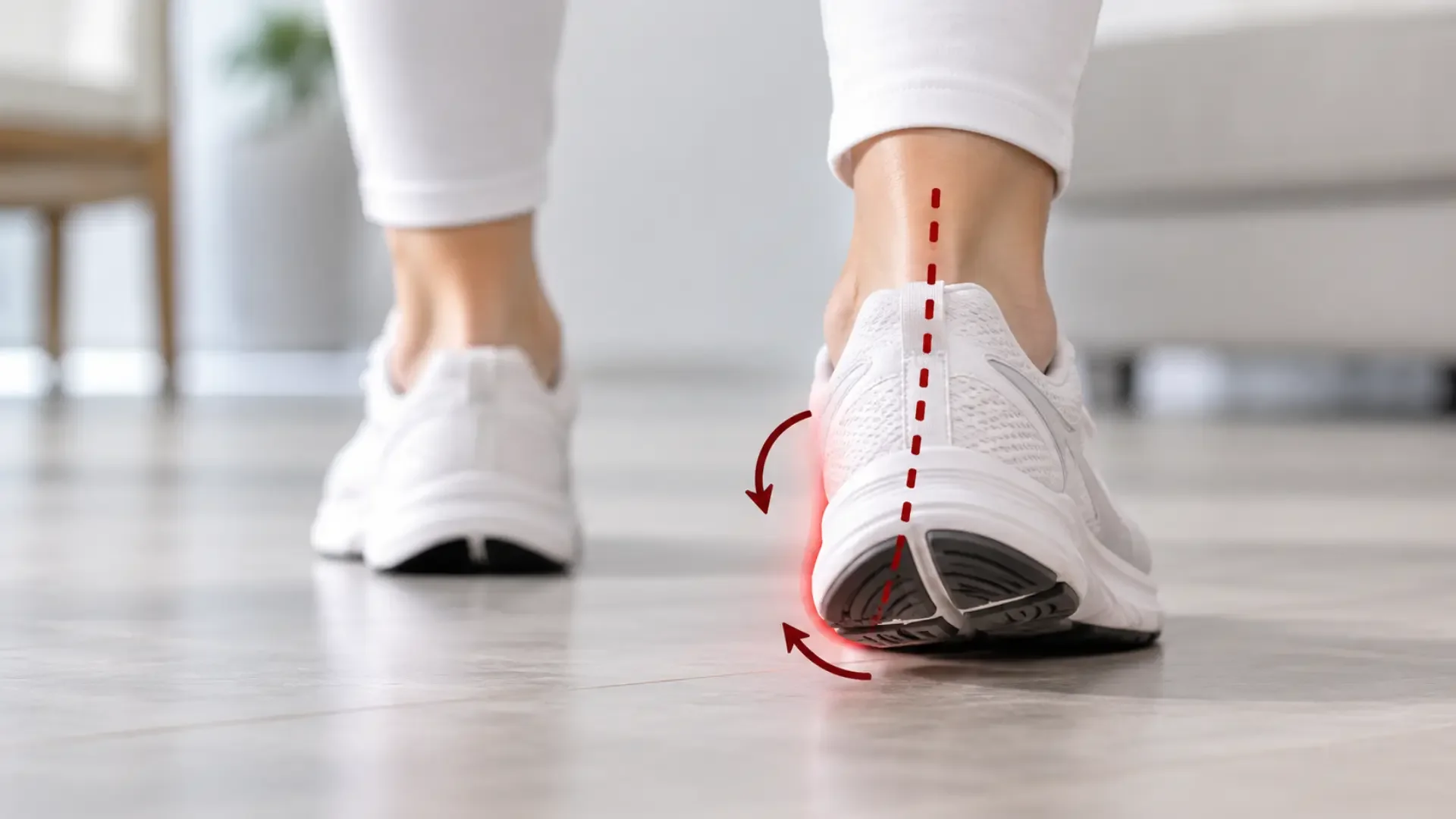
4. Overpronation
Overpronation occurs when the feet roll excessively inward during standing and walking.
This alters weight distribution and increases strain on the feet, ankles, knees, and lower back.
Signs of overpronation include:
Flat-foot appearance
Uneven shoe wear
Frequent foot fatigue
Recurring heel or arch pain
5. Hard Walking and Standing Surfaces
Standing on concrete, tile, or other hard surfaces for hours significantly increases the stress placed on your feet.
Unlike softer surfaces, hard flooring absorbs very little impact.
As a result, your muscles, joints, and connective tissues absorb the majority of the force.
Why Foot Pain Often Gets Worse Over Time
Many people ignore foot discomfort in the beginning.
The pain may start as mild soreness that disappears after resting.
However, when the underlying cause remains unaddressed, the stress continues to accumulate.
Over time, this can contribute to:
Chronic plantar fasciitis
Achilles tendonitis
Knee pain
Hip discomfort
Lower back pain
Reduced mobility
What begins as simple foot fatigue can eventually affect your entire body.
How to Reduce Foot Pain from Standing All Day
Fortunately, there are several ways to reduce stress on your feet and improve comfort throughout the day.
Wear Supportive Footwear
Choose shoes that provide:
Proper arch support
Stable heel support
Adequate cushioning
Sufficient room for your toes
Durable midsoles
Shoes should support your feet, not force your feet to compensate for poor design.
Take Movement Breaks
If possible, avoid standing completely still for extended periods.
Simple movement helps improve circulation and reduces muscle fatigue.
Try to:
Walk periodically
Stretch your calves
Shift positions regularly
Elevate your feet during breaks
Even short breaks can make a difference.
Strengthen Your Feet and Lower Legs
Strong foot and calf muscles help support your body's weight more efficiently.
Exercises such as:
Calf raises
Toe curls
Foot doming exercises
Balance drills
can improve foot function and reduce fatigue over time.
Address Biomechanical Issues
If pain continues despite changing shoes and resting, there may be an underlying biomechanical problem contributing to the issue.
This is where professional assessment becomes important.
How Custom Orthotics Can Help
Custom orthotics are designed to improve the way your feet support and distribute body weight.
Unlike generic insoles, custom orthotics are created specifically for your unique foot structure and movement patterns.
They can help:
Support the arches
Improve alignment
Reduce excessive pronation
Distribute pressure more evenly
Minimize strain on the plantar fascia
Improve comfort during long workdays
For individuals who spend eight to twelve hours standing daily, proper support can make a significant difference in overall comfort and mobility.
The FOOTLAB Approach
At FOOTLAB, we understand that every foot is different.
That's why we begin with a comprehensive biomechanical assessment to identify the root cause of your discomfort.
Our process includes:
Biomechanical Evaluation
We assess posture, foot structure, and lower limb alignment.
Dynamic Pressure Analysis
Advanced technology helps us understand how pressure is distributed across your feet.
Gait Assessment
We evaluate how your feet function during movement and standing.
Custom Orthotic Fabrication
Every orthotic is designed specifically for your individual needs and lifestyle.
Frequently Asked Questions
-
While it's common, persistent foot pain should not be considered normal. Ongoing discomfort may indicate poor support, biomechanical issues, or an underlying foot condition.
-
Yes. Properly designed insoles can improve support, distribute pressure more evenly, and reduce strain on the feet.
-
Yes. Prolonged standing can increase strain on the plantar fascia, especially when combined with poor footwear or inadequate support.
-
If foot pain continues despite changing shoes, resting, or using over-the-counter inserts, a biomechanical assessment can help determine whether custom orthotics are appropriate.
The Bottom Line
If your feet hurt after standing all day, don't assume it's simply part of the job.
Foot pain is often a sign that your body isn't receiving the support it needs.
By addressing the root cause—whether it's poor footwear, lack of arch support, or biomechanical imbalances—you can improve comfort, reduce fatigue, and protect your long-term mobility.
At FOOTLAB, we're committed to helping hardworking Filipinos move comfortably and confidently through expert foot care and custom orthotic solutions.