
Flat Feet (Pes Planus): Causes, Symptoms & Treatment Support Treatment
Learn about flat feet (pes planus), including causes, symptoms, and treatment options. Discover how FOOTLAB's Certified Orthotists and custom orthotic insoles help improve arch support, foot alignment, and everyday comfort.
What Is Flat Feet (Pes Planus)?
Flat feet, also known as pes planus or fallen arches, is a condition where the arches of the feet are lower than normal or completely collapsed. As a result, most or all of the sole comes into contact with the ground while standing or walking.
When the arches collapse, the body's natural alignment can be altered. Because the arches help absorb shock and stabilize movement, this change cascades stress up the entire kinetic chain:
Without proper support, flat feet may alter normal gait patterns, placing additional burden on higher structural joints and contributing to muscle fatigue or chronic imbalance.
-
Low or Absent Arch
The inner midfoot profile appears noticeably flattened or rested against the floor while standing.
-
Muscular Foot Fatigue
The feet feel heavy, strained, or tire very easily after standard walking, standing, or training loops.
-
Medial Arch Pain
Persistent aching, structural tenderness, or burning soreness tracking along the inner border of the foot.
-
Focal Heel Discomfort
Aching or deep throbbing developing beneath or around the heel pad area following prolonged activity.
-
Inner Ankle Strain
Noticeable strain or tracking discomfort localized directly around the inside profile of the ankle bone.
-
Pronounced Overpronation
An extreme, visible inward rolling of the ankles and midfoot sections during gait movement tracks.
-
Localized Soft Inflammation
Minor soft-tissue swelling or inflammatory irritation appearing across the foot joints after long static hours.
-
Knee Alignment Tracking
Poor base foot stability compromises mechanical knee rotation and tracking, leading to localized tracking pain.
-
Postural Back Discomfort
Altered weight distribution places excessive mechanical load shifting into the hips and lumbar complex lines.
-
Static Standing Fatigue
Maintaining balance on unyielding, flat floors becomes increasingly fatiguing and uncomfortable.
-
Medial Outsole Erosion
Footwear wear patterns showcase an accelerated, heavy friction breakdown clustered entirely along inner borders.
-
Compromised Stability
Running, explosive jumping, and team athletic movements feel less efficient or stable due to low spring force.
What Causes Flat Feet?
Several factors may contribute to flat feet, including:
Genetics
Many people inherit naturally low or absent arches.
Aging
The supporting tissues of the foot may weaken over time.
Posterior Tibial Tendon Dysfunction
Weakness or injury to the tendon supporting the arch can cause it to collapse.
Foot & Ankle Injuries
Previous fractures, ligament injuries, or tendon damage may alter foot structure.
Obesity
Additional body weight increases stress on the foot's supporting structures.
Pregnancy
Hormonal changes and increased body weight may temporarily affect arch height.
Arthritis
Inflammatory and degenerative joint conditions can contribute to arch collapse.
Muscle Weakness
Weak foot and lower leg muscles may reduce arch stability.
Why Do Flat Feet Become Painful?
The arches help distribute pressure evenly across the foot during walking and running.
When the arches collapse, excessive pressure is placed on the soft tissues, joints, and muscles responsible for supporting the foot.
Over time, this may lead to:
- Excessive inward foot rolling (overpronation)
- Increased strain on the plantar fascia
- Foot and ankle fatigue
- Heel pain
- Tendon irritation
- Knee, hip, and lower back discomfort
- Reduced walking and running efficiency
- Increased risk of overuse injuries
Can Custom Orthotic Insoles Help Flat Feet?
Custom orthotic insoles may help support the arches, improve pressure distribution, and enhance overall foot alignment for individuals with flat feet. Unlike generic insoles, custom orthotics are designed based on your unique foot structure, gait, and biomechanics.
Your assessment may include:
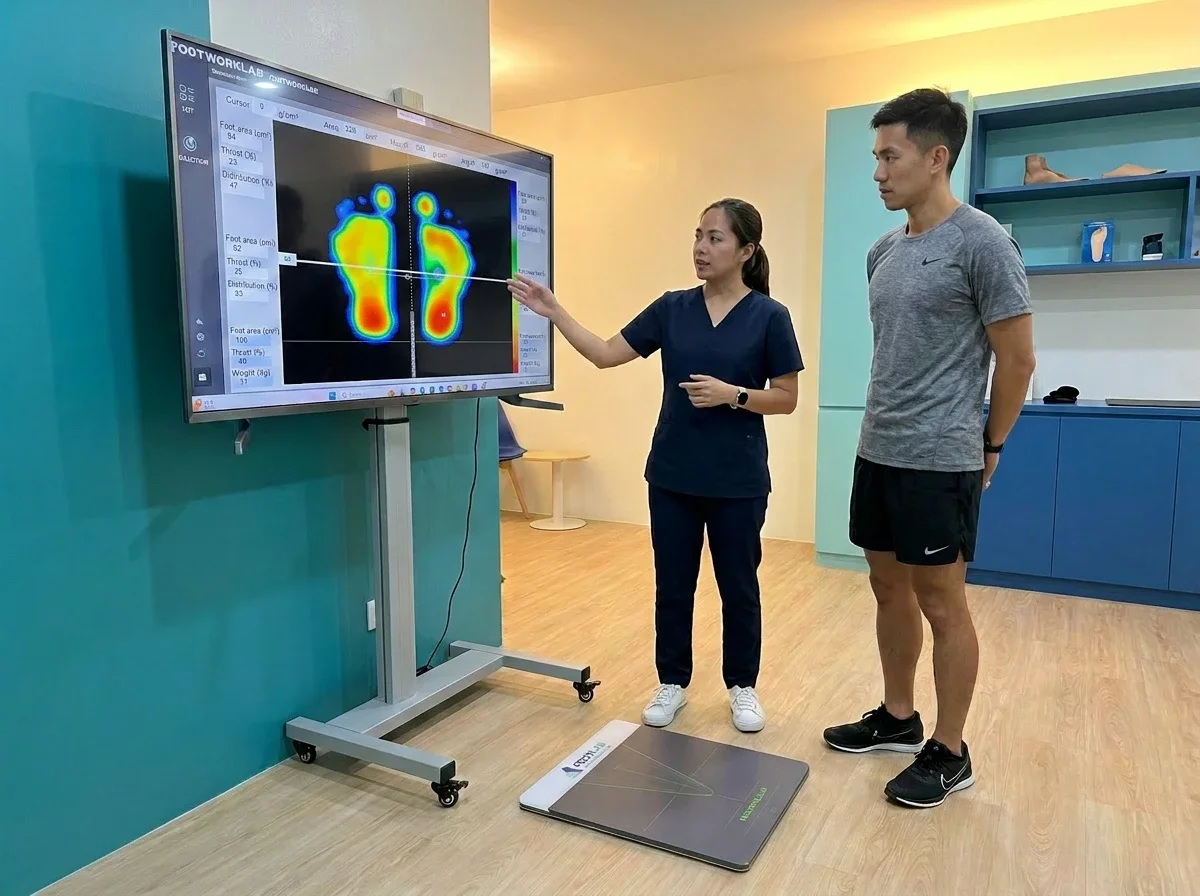
Foot posture evaluation, digital pressure mapping, walking and gait analysis, functional movement assessment, and personalized treatment recommendations.
Based on your assessment results, our orthotists will recommend a custom orthotic solution tailored to your lifestyle, activity level, and foot mechanics.